
Data Governance Consulting Services for Enterprise Teams
Get more control over how your data is defined, owned, managed, and used across the business. Cadeon helps enterprise teams improve data quality, set clear ownership, reduce reporting inconsistencies, and build governance processes that work across systems, departments, and analytics environments.


Make Data Governance Easier to Manage
Strategy driven
Technology enabled
Results focused

Data Governance Services That Fit Your Business
Data Governance Consulting
Define ownership, responsibilities, standards, policies, and decision-making rules for the data your teams depend on.
Data Quality
Find the data issues affecting reporting and analytics, then put practical checks and standards in place to reduce them.
Data Ownership and Stewardship
Make it clear who owns important data, who maintains it, and who is responsible when something needs to be fixed.
Governance for Reporting and Analytics
Create shared definitions, trusted sources, and clear rules so teams are not working from different versions of the same metric.
What a Data Governance Engagement Can Include
Start With the Data Problems Your Teams Already See

What Changes When Data Governance Is Working
Faster access to clean, consistent data across systems.
Improvement in data accuracy and reporting reliability.
More business insights generated through stronger BI systems and trusted data.
We Start With How Your Teams Use Data
Work With the People Using the Data
We involve the teams responsible for creating, managing, reporting, and using data so the governance model fits how the business actually works.
Fix the Issues That Matter First
We prioritize problems affecting data quality, reporting accuracy, ownership, and decision-making instead of adding unnecessary processes.
Put Governance Into the Systems
Clear ownership, quality checks, access controls, and common definitions are built into the data and BI environment so governance becomes part of everyday work.

From Data Issues to a Working Governance Model
Discover and Define
We first identify where data is coming from, how teams are using it, and where trust or ownership starts to break down.
Review key data sources and systems
Identify ownership and data quality gaps
Agree on priorities and business requirements
Design and Implement
Once the priorities are clear, we build the governance structure and connect it to your reporting, BI, and data environment.
Define ownership, standards, and controls
Set up governance processes and workflows
Align BI dashboards and data integrations
Optimize and Support
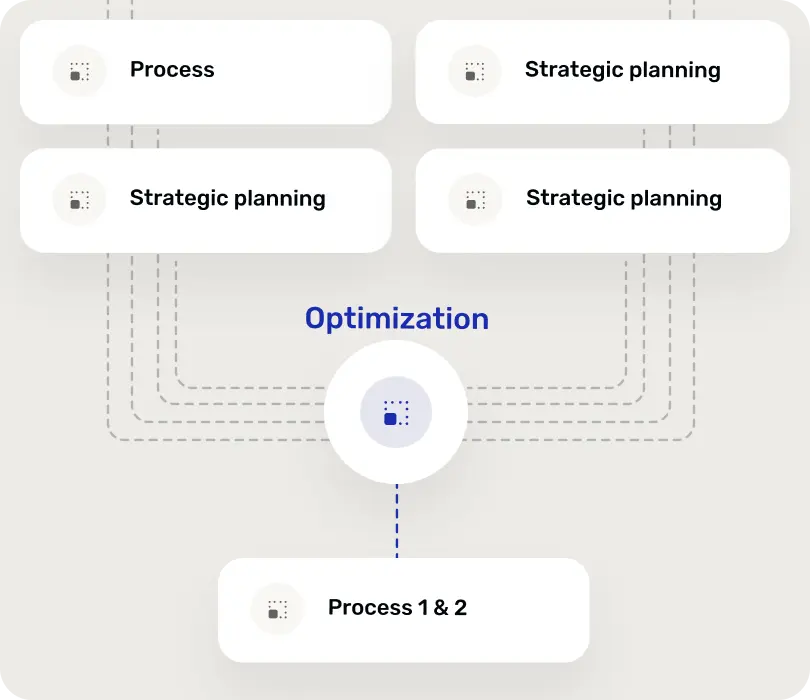
After implementation, we help keep the governance model useful as your data, systems, and reporting requirements change.
Review data quality and performance
Support internal teams and data owners
Improve governance processes over time

Give Your Teams a Clearer View of the Business
Dashboards People Can Actually Use
Build BI dashboards around the metrics your teams need to monitor, without burying them in unnecessary reports.
Reporting Without the Manual Work
Reduce spreadsheet-heavy reporting by bringing recurring reports and business data into a more efficient BI environment.
Stop Moving Data Between Systems by Hand
Connect Your Existing Systems
Bring cloud platforms, business applications, databases, and on-premise systems together without replacing everything you already use.
Automate the Data Flow
Build pipelines that move and prepare information automatically, reducing repetitive work and delays between systems.
Make Room for What Comes Next
Create an integration setup that can support new data sources, reporting needs, and analytics projects as the business changes.
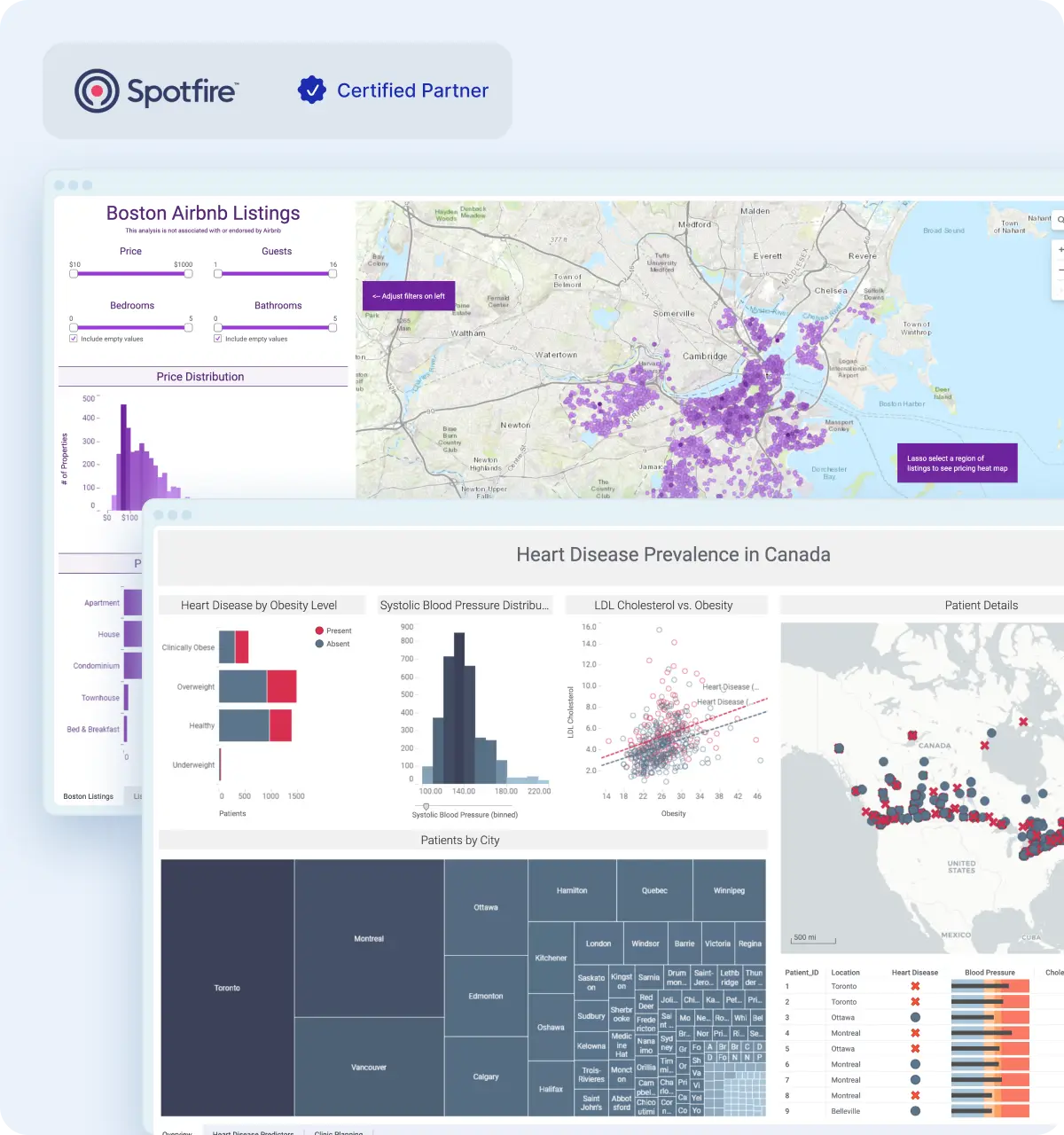
Need More From Your Spotfire Environment?
Featured Case Studies

GLJ and Cadeon: Transforming Data Analysis with Spotfire
GLJ, a leading consulting firm specializing in resource evaluation, technical studies, and emissions management, partnered with Cadeon to deliver more efficient, data-driven insights through Spotfire.

Spotfire® for Operational Dashboards in Energy.
Cadeon helped energy drilling and completion teams streamline daily operational reporting by replacing manual data aggregation with automated, interactive Spotfire dashboards accessible across the organization.
.avif)
Spotfire® for Loss Management in Oil & Gas
Cadeon implemented a comprehensive loss management analysis solution using Spotfire, helping an oil and gas operator standardize production loss reporting, improve data quality, and support executive decision-making.

Spotfire® for Drilling and Completions Performance Analysis
Cadeon helped an innovative drilling contractor transform high-frequency rig instrumentation data into interactive Spotfire dashboards, giving operators and well owners clear visibility into drilling performance at any point in time.

Spotfire® for Organizational KPI Analysis in Real Estate
Cadeon helped a large real estate organization centralize and visualize key performance indicators, giving leadership direct, interactive access to membership, operational, and financial insights through Spotfire dashboards.
Spotfire® Automation Services for High-Volume PDF Reporting
Using Spotfire Automation Services and the Cadeon Print Module (CPM), Cadeon enabled automated, high-volume PDF report generation with consistent formatting and improved readability.
.avif)
Real-Time Analytics for Sports & Entertainment Operations
Cadeon helped a sports and entertainment organization integrate multiple data systems into a single, real-time analytics platform to support better customer experience and more profitable event operations.
You Don’t Need Another Strategy Deck
Consulting and Implementation Together
The same team that helps shape the direction can stay involved when it is time to build, configure, integrate, and launch.
Experience With Complex Enterprise Data
Cadeon works with organizations in industries such as energy, manufacturing, banking, and life sciences, where data environments are rarely simple.
More Than One Technology
We work across the data environment rather than forcing every problem into one platform. That gives us room to recommend and build around what your organization already uses.
Need a Clearer Plan for Your Data?

Frequently Asked Questions
What is data governance?

Data governance is the set of rules, roles, standards, and processes an organization uses to manage its data. It helps define who is responsible for data, how it should be used, and what standards need to be followed across the business.
What is the difference between data governance and data management?
Data governance defines the policies, ownership, and standards for data. Data management is the day-to-day technical work involved in storing, organizing, integrating, securing, and maintaining that data.
What is a data governance framework?
A data governance framework is the structure an organization uses to manage data consistently. It usually covers ownership, stewardship, data quality, access, policies, standards, and how decisions about data are made.
Who should be involved in data governance?
Data governance usually involves both business and technical teams. This can include data owners, data stewards, IT teams, analytics teams, compliance teams, and business leaders who rely on the data.
How does data governance improve BI and reporting?
Data governance helps BI teams work with clearer definitions, agreed data sources, and consistent metrics. This reduces situations where different reports show different numbers for the same KPI.
How long does a data governance project take?
The timeline depends on the size of the organization, number of systems involved, current data maturity, and the scope of the project. Some projects begin with a focused assessment, while larger programs may be implemented in phases across multiple teams or data domains.
How does data governance support AI?
AI depends heavily on the quality and reliability of the data behind it. Data governance helps improve ownership, access, quality, consistency, and traceability before that data is used in AI models or applications.
What are common signs that a company needs better data governance?
Common signs include conflicting reports, unclear data ownership, inconsistent definitions, recurring data quality issues, manual fixes, and difficulty finding or trusting important business information.