
Why Data Analytics is the Key to Digital Transformation in 2026
In boardrooms across Canada and the US, leaders are under pressure to prove that their digital initiatives are doing more than adding new software. Cloud migrations, new apps, and dashboards only matter if they change decisions on the front line. That's where Data Analytics steps in as the difference between digital theatre and genuine transformation.
This article explains how analytics, big data platforms, and AI-powered insight work together in 2026, and offers a practical roadmap you can apply in energy, utilities, manufacturing, financial services, healthcare, and other data-heavy sectors.

Data analytics turns digital investments into better, faster decisions in the boardroom.
TL;DR: Data analytics & digital transformation in one view
- Digital transformation only works when decisions change, not just technology.
- Analytics connects strategy to daily operations by turning raw information into action.
- Big data analytics and AI now put predictive, continuous insight in the hands of business users.
- A simple 5-step roadmap helps you move from scattered reports to governed data analytics solutions.
- Partners like Cadeon de-risk the journey with proven frameworks and proof-of-value engagements.
Table of contents
- What digital transformation really means in 2026
- Why analytics is now the engine of transformation
- From dashboards to decisions: big data analytics in action
- Where AI in data analytics changes the game
- A 5-step data analytics roadmap for 2026
- What this looks like in the real world
- How Cadeon helps leaders prove value fast
- Common mistakes to sidestep
- Key takeaways for your 2026 roadmap
What digital transformation really means in 2026
By 2026, digital transformation is no longer about “going paperless” or launching a single app; it is about rewiring how your organization plans, operates, and learns using data across operations, finance, supply chain, customer channels, and capital decisions.
At its heart, transformation answers three questions:
- What decisions matter most to our performance and risk?
- What information would make those decisions faster and more reliable?
- How do we deliver that information to the right people at the right time?
Modern data analytics solutions address those questions directly, turning fragmented spreadsheets and legacy reports into governed, reusable assets that the whole business can trust. When that happens, technology projects stop being experiments and start behaving like growth and efficiency engines.
If your organization is still living in static reports, this is the gap your digital strategy needs to close. That is where platforms like Cadeon's Spotfire services come in, together with a clear analytics roadmap.
Why analytics is now the engine of transformation
Think about the last time a major project missed its promise. The technology likely worked, but people lacked the right information: schedulers without real-time capacity data, field teams without asset history, finance teams stitching spreadsheets together at month-end.
Analytics fixes that disconnect. It:
- Connects data across operational systems, finance, and external feeds.
- Standardizes definitions so “production,” “margin,” or “downtime” mean the same thing everywhere.
- Provides governed, interactive views that let users ask follow-up questions on the fly.
- Feeds AI models with high-quality, trusted data instead of one-off extracts.
In other words, analytics is the operating system of digital transformation. Without it, every new cloud app and sensor network just adds one more silo. With it, your cloud investments, IoT projects, and automation programs reinforce one another instead of competing for attention.
For many Cadeon clients, the turning point is building a single, enterprise-wide analytics layer using data virtualization and governed data models that sit above their existing systems.
From dashboards to decisions: big data analytics in action
Leaders sometimes tell us, “We already have dashboards, but our results have not moved.” That is a classic sign that reporting stops at static views, and the heavy lifting is still happening in individual spreadsheets or side conversations.

Big data analytics helps operations teams move from static reports to real-time decisions.
Operational efficiency and cost
With big data analytics, you can blend sensor readings, work orders, production volumes, and weather into a single view. Operations teams see which assets are underperforming, which maintenance tasks truly extend life, and which constraints are holding throughput back. That turns “we think” into “we know” when chasing throughput, fuel savings, or labour productivity.
Risk, compliance, and cyber security
Many industries Cadeon serves face intense regulatory and cyber pressure. Advanced analytics can track access patterns, unusual activity, and control changes in near real time. When logs, alerts, and business context sit together, security and compliance teams respond faster and spend less time wading through false alarms.
New revenue and customer experiences
Big data analytics is not only about cutting costs. In financial services or healthcare, for example, it helps identify high-value customer segments, likely churn, or care gaps. Marketing and service teams can prioritize outreach where it truly matters. This is where integration with cloud platforms such as Microsoft Azure lets you bridge analytics and real-time customer actions.
The common thread is simple: information moves from backward-looking slides to forward-looking action, grounded in a single source of truth.
Where AI in data analytics changes the game
AI in data analytics gets plenty of headlines, but the real value shows up in practical ways. When it sits on top of solid data models, it becomes less about magic and more about scaling good decisions.

AI in data analytics augments analysts, helping them focus on higher-value decisions.
Augmented analysts, not replaced analysts
In many organizations, analysts spend most of their week cleaning data and fixing joins. Machine learning models and AI helpers can take over a big slice of that work: suggesting joins, flagging outliers, and recommending visualizations. Your analysts move up the value chain to framing business questions and validating results with domain experts.
Predictive and prescriptive insight
Once your foundation is in place, AI can:
- Predict asset failures before they hit operations.
- Suggest optimal setpoints or routes based on historical patterns.
- Score customers or assets on risk and profitability.
- Surface anomalies across millions of rows that a human would not see.
None of this works without clean, connected data and the right data analytics solutions underneath. That is why many digital roadmaps now start with analytics, not as an afterthought but as the first platform investment.
Industry research from firms such as McKinsey and Gartner links advanced analytics to stronger revenue and EBIT performance.
A 5-step data analytics roadmap for 2026
To make this concrete, here is a simple “5A” roadmap we use with mid-sized and enterprise clients. It connects your digital ambitions to specific analytics capabilities.

A clear roadmap aligns data analytics initiatives with measurable business outcomes.
1. Assess your data foundation
Start by mapping where your critical data lives: ERP, production systems, trading and risk platforms, clinical or patient systems, CRM, spreadsheets, and third-party feeds. Score each source on quality, accessibility, and business impact. This is where Cadeon's enterprise data analytics solutions work begins not with tools, but with a grounded view of what you already have.
2. Align use cases to business value
Next, list the top decisions you would like to improve over the next 12–24 months. Rank them by impact (cost, revenue, risk) and data readiness. The sweet spot sits where data is available and value is high. Typical early wins include production optimization, maintenance prioritization, cash forecasting, and fraud or anomaly detection.
3. Architect scalable data analytics solutions
With priorities clear, design an architecture once, then reuse it. That usually includes:
- A governed semantic layer or data virtualization platform.
- A modern BI tool such as Spotfire for rapid, interactive insight.
- Cloud storage and compute where big data analytics workloads can run reliably.
- Security and access controls that satisfy IT and audit teams.
The key is to resist one-off projects and instead build building blocks that can support dozens of use cases.
4. Activate insights in the business
Dashboards do not change performance on their own. Cadeon typically works with operations, finance, and field leaders to bake analytics into existing workflows: shift handover meetings, capital reviews, weekly performance huddles, or board packs. That is when time-to-insight shortens, and decisions start to look different.
5. Adopt a data-driven culture
Finally, invest in skills and governance. Offer hands-on training, such as custom Spotfire training for citizen analysts. Set clear rules for data ownership. Celebrate teams that use analytics to challenge assumptions. Over a year or two, this steady drumbeat turns analytics from “extra work” into “how we run the business.”
“Digital transformation is not a one-time project. It is a new way of deciding, powered by data.”
What this looks like in the real world
Consider a North American energy company with hundreds of reports and no single version of the truth. Operations, finance, and engineering each had different numbers for production, downtime, and margin.
Cadeon implemented a governed Spotfire environment, virtualized key data sources, and built a small set of shared models so the company could move from weekly, spreadsheet-driven views to daily, interactive analytics. Within months, they:
- Reduced manual reporting time significantly by automating recurring reporting and centralizing data in governed dashboards.
- Identified underperforming assets that were quietly eroding margin.
- Gained early visibility into production risks across the portfolio.
How Cadeon helps leaders prove value fast
Many organizations know they need better analytics but worry about cost, disruption, and stalled projects. Cadeon's Synapses framework and the risk-free $10K Digital Transformation Challenge are focused engagements that prove value in weeks, not years.
As a TIBCO Gold Partner and Microsoft partner, Cadeon has delivered more than $300M in documented business value by:
- Designing enterprise analytics architectures IT can support long term.
- Delivering high-impact use cases with Spotfire and complementary tools.
- Training in-house teams to extend and maintain solutions.
- Embedding cyber security analytics and governance from day one.
Ready to turn your digital roadmap into measurable outcomes? Book a free consult with Cadeon's data and analytics advisors.
Common mistakes to sidestep with analytics programs
After hundreds of projects, a few patterns show up again and again. Here are some traps leaders can sidestep:
- Starting with tools, not outcomes. Buying platforms before defining the decisions you want to improve leads to shelfware and frustration.
- Building one-off reports for every request. This locks insight into spreadsheets and makes scaling nearly impossible.
- Skipping governance. When definitions and permissions are loose, trust in the numbers erodes and adoption along with it.
- Underinvesting in people. Without training and change support, even the best big data analytics stack becomes an expert-only tool.
The organizations that win in 2026 treat analytics as shared infrastructure and a shared language, not a series of disconnected reports.
Key takeaways for your 2026 roadmap
- Digital transformation succeeds when analytics delivered through governed, scalable data analytics solutions sits at the core of your strategy, not as a side project.
- Big data analytics and AI help you move from hindsight to foresight across operations, finance, risk, and customer experience.
- A simple, structured roadmap to assess, align, architect, activate, adopt keeps teams focused on value, not just technology.
- Specialist partners like Cadeon reduce risk, compress timelines, and transfer skills to your own teams.
The next wave of digital leaders will not be the ones with the most tools. They will be the ones who turn data into a habit, a daily, repeatable way of deciding. If that is where you want to take your organization, now is the time to put analytics at the centre of your 2026 plans.
Ready to explore what this could look like for your team? Book a free consultation or learn more about Cadeon's data and analytics services.
Frequently asked questions
How does data analytics support digital transformation in 2026?
Data analytics connects data across systems, standardizes definitions, and gives decision-makers trusted insight, so digital investments translate into faster, more reliable, and safer decisions.
Where should we start with a data analytics roadmap?
Start by assessing your data foundation and the decisions that matter most for cost, revenue, and risk, then prioritize a few high-value use cases and design a reusable analytics architecture to support them.
Do we need AI to see value from data analytics?
You do not need AI to see value from data analytics; most organizations start with better reporting, visualization, and access, then add AI once data is clean and connected to enable predictive and prescriptive insight.
How does Cadeon reduce risk in analytics and digital transformation projects?
Cadeon uses its Synapses framework and focused proof-of-value engagements, such as the $10K Digital Transformation Challenge, to test architecture, governance, and use cases in weeks before you commit to large-scale investment.
About the authors
This article was prepared by the Cadeon Data & Analytics Team, consultants and solution architects with deep experience in TIBCO Spotfire, data virtualization, information architecture, and AI-driven analytics across multiple industries.
Since 2007, Cadeon has helped organizations across North America turn information into money, delivering more than $300M in documented business value from data and analytics initiatives. Learn more on our About page.
Ready to transform your data strategy?
You might also like
Self-Service Analytics Without Shadow IT: 2-Speed Spotfire
Build self-service analytics in Spotfire without shadow IT. Use a 2-speed governance model that keeps regulated, asset-intensive teams fast and compliant.
Spotfire Data Governance Framework Ops Will Use: Fix KPI Trust
Build a Spotfire data governance framework that operations will actually use. Standardize KPI definitions, improve trust, and reduce reporting disputes.
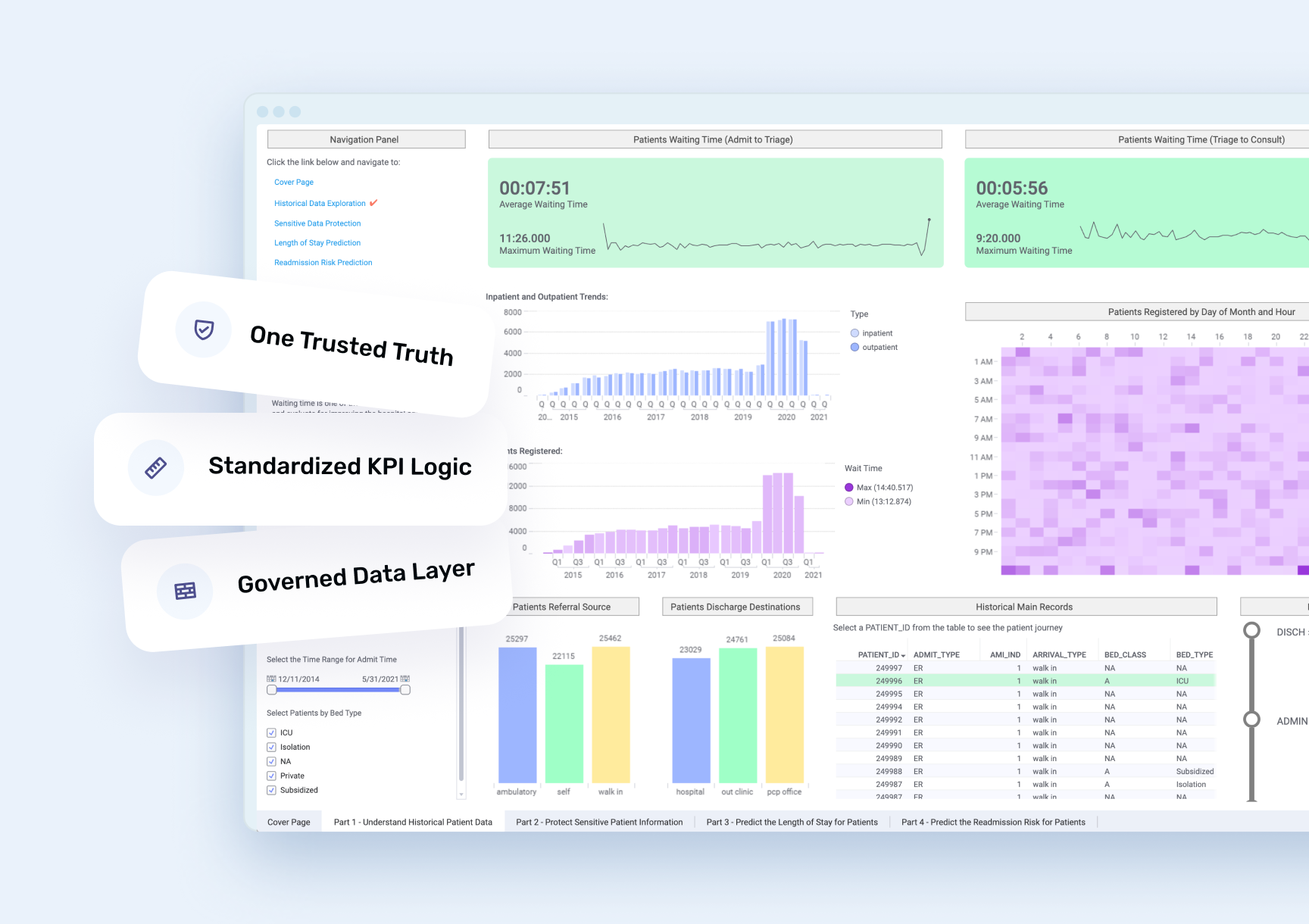
Operational Dashboard Design: Governed Spotfire Views for Leaders
Design governed Spotfire dashboards that your CFO and COO both trust. Standardize business rules, align KPIs, and reduce reporting friction.